
Ask Cheryl Robinson what “local” means at the Rose & Crown and its not just distance. “It is absolutely about quality, provenance and animal welfare,” she says. “Without those, the local aspect is irrelevant.”
Her husband Thomas’s family has farmed in Teesdale for four generations, and that background shapes what she and Thomas expect from the people who supply the inn. Head Chef Dave Hunter, a Teesdale man himself, chooses the suppliers and writes the menu, but he knows what the owners want: quality, provenance and animal welfare that meet their standards. His own rule is simple. “The better the ingredients, the less I need to do with them.”
Starting with the butcher
Meat is the biggest seller on Dave’s menu, so the butcher is where he starts. Peat’s Butchers in Barnard Castle is now part of Castle Bank Butchers, an independent group of shops across County Durham and Northumberland, and the Peat’s name is still on the shop in the Horsemarket.
Castle Bank buys its lamb at Darlington and Northallerton auction marts, from local farms mostly in County Durham and North Yorkshire, and says all of it is fully traceable. The beef comes from native breeds such as Hereford, Aberdeen Angus and Belted Galloway, from trusted farms with high standards of animal welfare, and it is dry-aged with Himalayan rock salt. That is the kind of traceability a farming family looks for.
Dave talks to his butcher regularly and is always asking about different cuts he can use without creating waste. He likes a nose-to-tail approach, which means premium cuts alongside slow-cooked ones, and offal too.
Teesdale lamb
Ask Dave what he likes cooking best and there’s no hesitation: “Teesdale lamb, all day long.” He believes the local lamb “makes all the difference in flavour.”
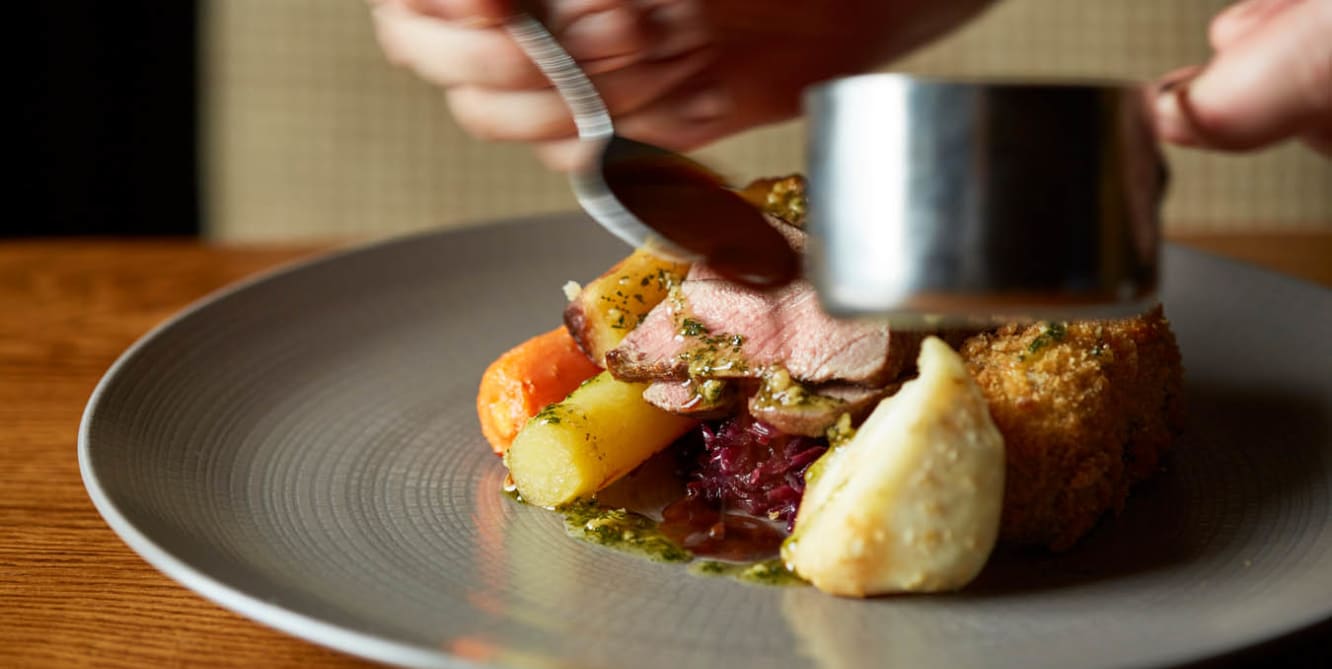
The dinner menu has it as a pan-fried loin with haggis shepherd’s pie, lamb kebab, braised red cabbage, swede fondant and rosemary jus. Premium loin, a slow-cooked pie and a kebab all come from the one animal. An earlier dish, a trio of Teesdale lamb, went further: premium cuts, cuts that needed slow cooking , with mint from the garden and pan haggerty, the North East potato dish.
Cheryl names lamb first when asked what she thinks of as Teesdale, then venison pie. Grouse comes in its season. The village helps explain why. “We are a pretty dales village surrounded by green fields dotted with sheep, moors with grouse and a very rural feeling.” Asked whether the menu would look the same somewhere else, her answer was “Absolutely” not.
Cheese from down the road
Cotherstone Cheese is made a couple of miles away, and the maker delivers it personally. Dave says having such a small producer so close gives the inn “a unique selling point.”
He has used Teesdale Cheesemakers from the very beginning. “It’s a great story of a local business growing from, and being successful from, producing one cheese to over ten now, and a café and glamping site.” His verdict on cheese in general: “It’s so versatile.” The menu offers four local and British cheeses with homemade chutney, grapes, and crackers. Dave also thinks Teesdale lamb and Teesdale cheese deserve more recognition outside the area.
How far is local?
Not everything on the menu comes from a few miles away, and the kitchen doesn’t pretend it does. Hodgson Fish is in Hartlepool, but Dave says it is “probably the closest fishing fleet” and the fish arrives fresh, with a good range to choose from. The cider-battered fish and chips, which Dave says repeat customers love, so it’s always on, starts there.
QFS, based in Teesside, supplies other ingredients. On its own website it says it works where possible with suppliers close to home, including herbs grown in North Yorkshire, milk and cream from County Durham and seasonal vegetables from Teesside. Caterite, from Cumbria, is further still. Dave counts it as local anyway, because it gives him “a little sneak peek at ingredients from the Lakes.” R&D Gregory Dairy and Lonton Coffee, both in Teesdale, are among the nearest suppliers, and some of the closest are people Cheryl and Thomas know personally. Cheryl is realistic about the cost: “There are always cheaper options, whatever you are buying, but buying cheap means compromise at some, if not many, points in production.”
The kitchen yard and the seasons
The most local ingredient comes from just outside the back door. The kitchen yard garden grows mostly fresh herbs, and in summer a crop of strawberries.
The menu changes four times a year, and Cheryl says why: key dishes are “very much about seasonality as that is when they are available and good.” Dave looks forward to asparagus in spring, British strawberries in summer and the first root vegetables in autumn. He will build a dish around asparagus because the season is so short. How does he know when something is ready for the menu? “When it’s ready, it’s ready. Can’t rush it.”
Pub grub and restaurant food
Dave has cooked at two-Michelin-star level, and when he’s asked why he chose the Rose & Crown, his answer is that “great food should be for the masses and not a select few.” So the menu has both. Half a table can order pub grub and half restaurant food, and he’s happy for them to mix and match. Alongside the lamb there is wood pigeon with black pudding, fig, apple and hazelnut, a 12-hour confit pork belly, steak frites and a four-cheese beef burger.
He admits the customers are “a little old school” and would like them to try more modern food influences from abroad. Cheryl sees it differently: the people who come to the Rose & Crown “are not just looking for cheap but appreciate quality, good sourcing and what comes with it.” What they notice, she says, is great-tasting food. Dave’s own summary of the cooking is “traditional, affordable quality food with a bit of innovation.”
What the owners would show you
Asked what she would show a first-time visitor in the kitchen, Cheryl’s answer is chefs making the venison and steak pies from scratch, the attention to detail in preparing the food, and the focus on flavour that uses every part of an ingredient. That is the owners’ standards and the chef’s nose-to-tail instincts in one place.
Cheryl says the local ethos “always existed, but we have grown it.” And if someone asks why they should care where their dinner came from, her answer is short: “Go and visit a battery egg factory and see the hens living in cages.”